Office
2920 Nebraska Avenue
Santa Monica
CA 90404
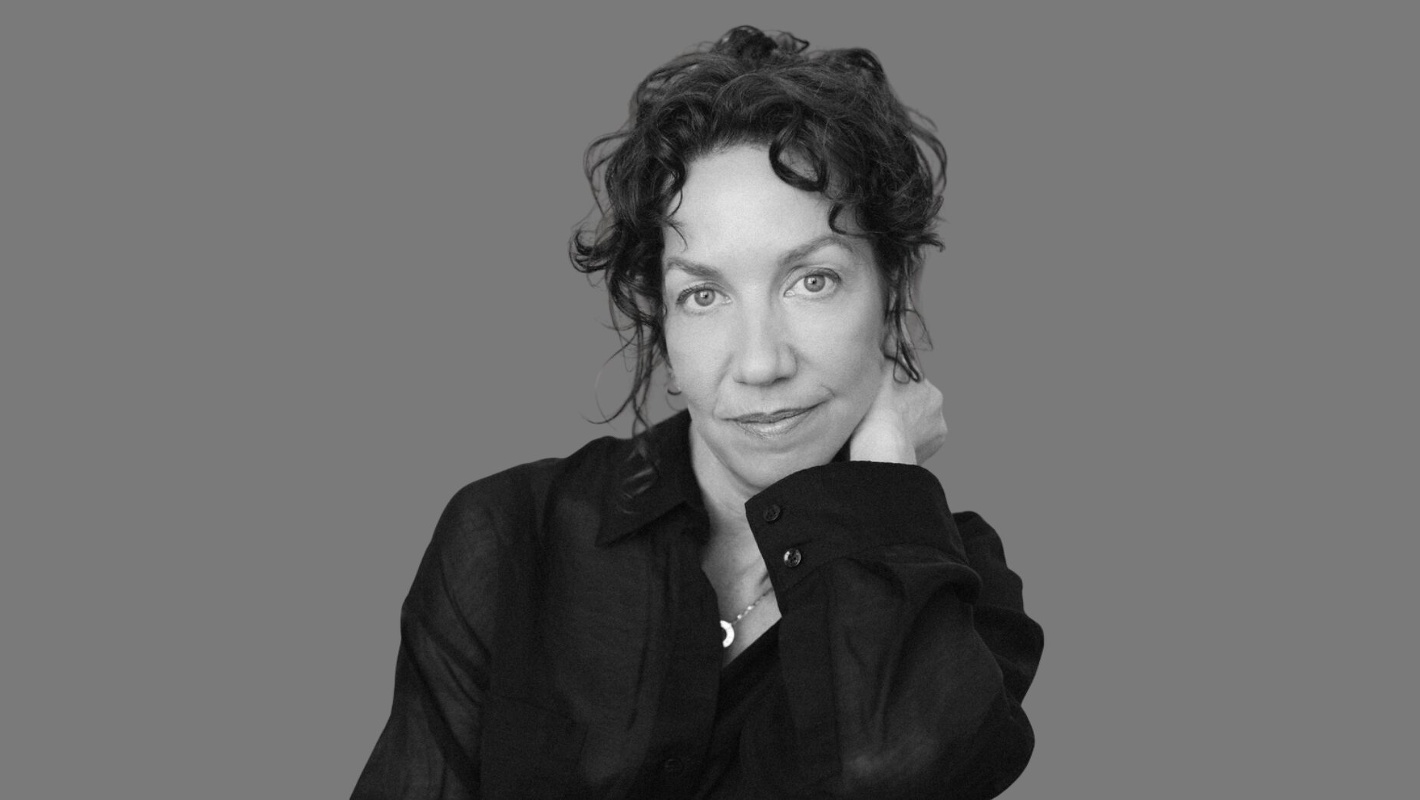
Director Yael Staav’s career began with a Cannes Lions Film Grand Prix, and continued to grow from there. Awarded in 2007 for ‘Evolution’, as part of Dove’s Campaign for Real Beauty, the groundbreaking film exposing secrets of the beauty industry has held-up in the two decades since its release.
Going on to work with clients including Etsy, Publix, Nintendo, Dove, Special K and Campbell’s, Yael is a well-known name within the commercial scene, but that’s not all there is to it. Boasting an established TV and comedy series portfolio which includes sketches for the ‘Baroness von Sketch’ show, and directing several series of Netflix’s ‘Workin’ Moms’, Yael is an example of a director who seamlessly moves between the commercial and TV landscapes.
Speaking with LBB’s Abi Lightfoot, as part of LBB’s The Long View series, Yael explores the differences and similarities between the two worlds, dispels myths around storytelling in 30 seconds versus 30 minutes, and unpacks why she feels that ‘Workin’ Moms’ resonated so widely in culture.
LBB> What’s the biggest myth about the difference between commercials and long-format storytelling?
Yael> The biggest myth is that it is much easier to tell a story in a 30 or 60-second commercial versus a 30 or 60-minute episode.
The magic we feel from a job done right is the same – and equally hard to capture and create in either medium. Those moments where you know an actor gave you an absolute truth or the camera team just pulled off the most amazing focus shift on a long crane move… they get me just as excited on either type of set.
With a series, you’re playing the long game. And that takes a different type of momentum – a different way to plan – and you have the advantage of building a much longer story. It goes without saying, there are bigger pay-offs when a show is done well. If a show makes you cry or laugh or high-five or punch the person next to you, the intensity of that feeling can really stay with you. But you also have the time (luxury) to build, to layer, to go back. Two weeks after shooting, you can be in dailies and think, ‘We missed that line; we need that beat to land in this scene,’ and you can continue to shape and add and paint and even re-shoot your way to bigger success.
In a 30‑second commercial, we never have that luxury. Every frame has to be doing a job by the end of the day or the week. And the speed and level of organisation and the number of people… the craft! By the 20th second, you need to have turned the story, or hit the brand, or landed the emotional beat. There’s a kind of ruthless precision to it and it demands just as much focus and as many accolades or high-fives when it’s done well.
LBB> What’s more challenging, distilling a storyline into a 30 or 60-second (or maybe shorter!) spot, or holding an audience’s attention for an hour, or perhaps even more?
Yael> Short spots are hard because of the exacting precision needed to pull them off well. You’re cutting frames and still trying to land a joke or a brand moment. There’s nowhere to hide; if a shot or line doesn’t add to the story, then it has to go. It’s not challenging per say, you just often have to say goodbye to your favourite ideas because there isn’t enough time to fit them into the story. The fun part is that jump cuts, a montage, a committed visual concept, or a camera move can propel you through time in a way that just wouldn’t work in long-format.
TV is more of a writer’s medium, or rather, as a director you are far more reliant on that team of wordsmiths sitting behind the monitor. No matter how amazing a shot is, it can’t get you out of a confusing structural issue. You need to sustain coherence and emotional truth over time while managing to keep multiple threads – character, theme, plot, tone and emotional logic – intact over hours. For me, that feels harder because you need to hold on to so many things, and the process of shooting over so many weeks can make it challenging to see the forest for the trees.
LBB> You’ve mentioned that TV is more of a writer’s medium. How does that change your role as a director compared with commercials?
Yael> In my experience, on a TV set, the script is sacred. You’re often shooting 26–28 minutes to get a 22‑minute episode, and you have to get what’s on the page. As a director-for-hire, if I swap out a line, someone will be there with a script saying, ‘It says this’. You’re part of a larger, long‑running organism, and a lot of major choices were made long before you arrived – casting, visual language, even a location they had to book before your block started. That said, once you get your feet wet, being a producing director is much more fun, and aligned a little more with commercial directing. You’re watching the casting tapes, you’re out scouting for the main sets three weeks ahead of time, but those gigs are more competitive and definitely more rare.
In commercials, you’re aligning with more of a director’s vision. You’ve pitched something that’s distinct from other directors, and now it’s your job to protect that conceit you’ve sold in the treatment. I can walk into a wardrobe day and say, ‘Let’s try a wig’, in a way I’d never do walking onto a show where an audience has lived with a character for three seasons.
Both spaces require collaboration and respect, but the degree of authorship and where that authorship sits is very different. For a series, you’re helming a ship that’s already at sea. In commercials, you’re often helping build the ship from scratch.
LBB> What’s your criteria for choosing a project?
Yael> Let me first say that I’m equally excited by a 30-second script that’s tightly built and a long-form episode that’s structurally ambitious. What I glom on to is STORY. I’m a sucker for a good story. A good story wins every time. If I am giggling with the potential as I am reading it, I am in. Similarly, if I am slightly nervous when reading it, I am in. I am also more apt to jump in if I get to have a say about the craft of making it, or where the craft matters: casting, locations, the choreography of shots, the economy of storytelling, and so on.
LBB> How do you map the rhythm and arc of a story to maintain audience engagement across hours, not just minutes?
Yael> I get super nerdy. My sketchbooks are filled with chicken scratch loops and flow charts.
For each episode I draw out a circle and mark the key plot points – what the audience learns, what the character knows, where we spike emotion or tension. I do this across all episodes I’m directing so I can see the macro-rhythm. It’s very, very hard to get all that information embedded into my brain the first week of prep – so, it’s always so helpful when we get scripts in advance so I can just read them over and over and over, trying to catch up to the writers who have been inside of it for months.
The film language comes after I’ve mapped the beats. It’s almost mathematical: protect the spine of the story first, then make it beautiful, or funny or whatever it needs to be. And that gives everyone – the writers, the crew – a framework to rally around.
LBB> What does preparation look like for you before you get to set?
Yael> Early-morning producer Zoom, coffee, water, art department Zoom, a sandwich, coffee, running to see a location, another Zoom on the car ride back when you lose the actor you fell in love with, land, snack, eek out a moment to write down the props you keep forgetting to tell that department about, listen to the playlist you made when you first read the script to try to get you in the mood to make the shot list, try to find a moment to shot list, switch to peppermint tea, end-of-day Zoom with producer to catch up with the growing to-do list for the next day, home, homework with kids / various drives to hockey arenas or baseball diamonds, text back and forth with wardrobe designer about a last minute idea you had for a near-impossible costume… rinse, repeat.
LBB> What is your specific process for building character performances with your cast that invite the audience to invest deeply enough to sustain interest across a prolonged narrative journey?
Yael> I hear that my work feels ‘captured’ and ‘honest’ and I am always trying to find the truth or moments of authenticity with actors in any medium. My process starts with finding time to meet the actors ahead of time, figuring out where they are coming from emotionally, how they like to get notes, what they think a scene is about…. The more we’ve talked about it, the more elevated that performance will be. Working with the actors is the best part of the job.
On set, I am always reviewing with the actors. We talk through: ‘What’s already happened to you in the story?’, ‘What mental garbage are you bringing from that previous scene into this one?’. We adjust around truth rather than volume. If it feels false or messy, then we find a more precise version or alter the pace, the behaviour, sometimes the size of the choice. The character has to be tracking honestly from beat to beat, even when the plot is twisting.
LBB> Can you share your experiences with casting, and your relationship to actors and the differences between the mediums?
Yael> For commercials, the cast has to be readable in an instant. You’ve got seconds. I’m looking for faces and timing that carry a whole backstory in a tiny window. There’s often more room to play on the day, so it’s loads more fun, or rather, there’s a greater pay-off working with nimble and experienced people who can dive right in with me.
For long-form, casting might be locked before the director gets there, so it becomes about protecting the continuity of character over time. There’s less room to make radical visual or tonal shifts with returning characters but the relationship part is very similar. As a director, you want the actors and crew to trust you, to understand from day one that you are there to protect them and to create a safe space where they can play and offer up suggestions… that you are there to make them look good so we all look like we know what we are doing.
LBB> Can you talk more about your relationship with editors?
Yael> It’s a true collaboration and I am grateful for the times when an agency asks me who I would like to partner with. Commercial shoots have to be planned meticulously, not only because you have to tell a story that resonates with the audiences quickly, but also because you have very few shoot days. And yet, my favourite editors consistently surprise me with structure and pace and sound design and rhythm. It’s shocking (in a lovely way) to see what a talented cutter can make out of the bones we hand over.
In the TV landscape, the edit is a much longer process and continues long after I have submitted my cuts. The editor follows it through producer’s cuts and network cuts – scenes move, vanish, get repurposed as the showrunners and producers have their eye on a much longer body of work. So, as much as I have a vision for my episodes and as often as they play as intended, there are definitely times where… well, you can imagine how many rounds of notes those poor editors go through. I just got a text this morning from the show runner on ‘North of North’ that one of my episodes is finally picture locked- it’s wild as I haven’t been in that edit suite in over a month. It’s definitely an exercise to let go but that month of network and producer notes and re-edits is built into the rhythm of the TV medium.
LBB> Given fragmented platforms, can you ensure the integrity of the filmic experience remains intact regardless of the varied viewing environment?
Yael> You can’t control where people watch, but you can build work so that its integrity is resilient.
Resonant stories need strong spines, emotionally resonant performances, and considered sound design. If these elements are well-crafted, then the piece can hold up on a phone just as well as in a cinema.
LBB> What is the single most important, non-plot-related thing you hope the audience takes away from the experience, defining what makes your work truly memorable and lasting?
Yael> I want to leave the audience with a felt sense of emotional truth – that the world, however heightened or comedic, felt emotionally honest. Not ‘truth’ as in realism for its own sake, but that the behaviour, tone, and pacing all lined up in a way that made them think, ’I recognise that feeling. I’ve been there before’. Even if they’ve never been in that specific situation.
LBB> Which single film or series in your body of work do you find is most often mentioned by audiences, and why do you believe that specific project has had the greatest lasting cultural impact?
Yael> Hmmmm, interestingly I think it might be ‘Workin’ Moms’. Simply because it came out at the time we were just starting to see and hear real stories about what it takes to be a woman crushing it at work and trying to find the balance of work/life/motherhood. The true and the ugly moments were there on Netflix and easy to consume. We were all locked inside during Covid, trying to work, and sit our kids in front of screens, and looking for any sort of escape, and these 22-minute stories were easy to access. Women (and men) found something they could relate to and escape into.
I remember handing my milk off to more than one poor PA – asking them to run back to the hotel with the icepacks and food for my babies. Until I saw Catherine [Reitman, creator, executive producer, writer, and star of ‘Workin’ Moms’] in the bathroom pumping her milk on an episode of the show, I don’t think I had seen myself mirrored on television. The truth and honesty about the balance/imbalance made it easy to relate to, which translated to so many of the other women.